
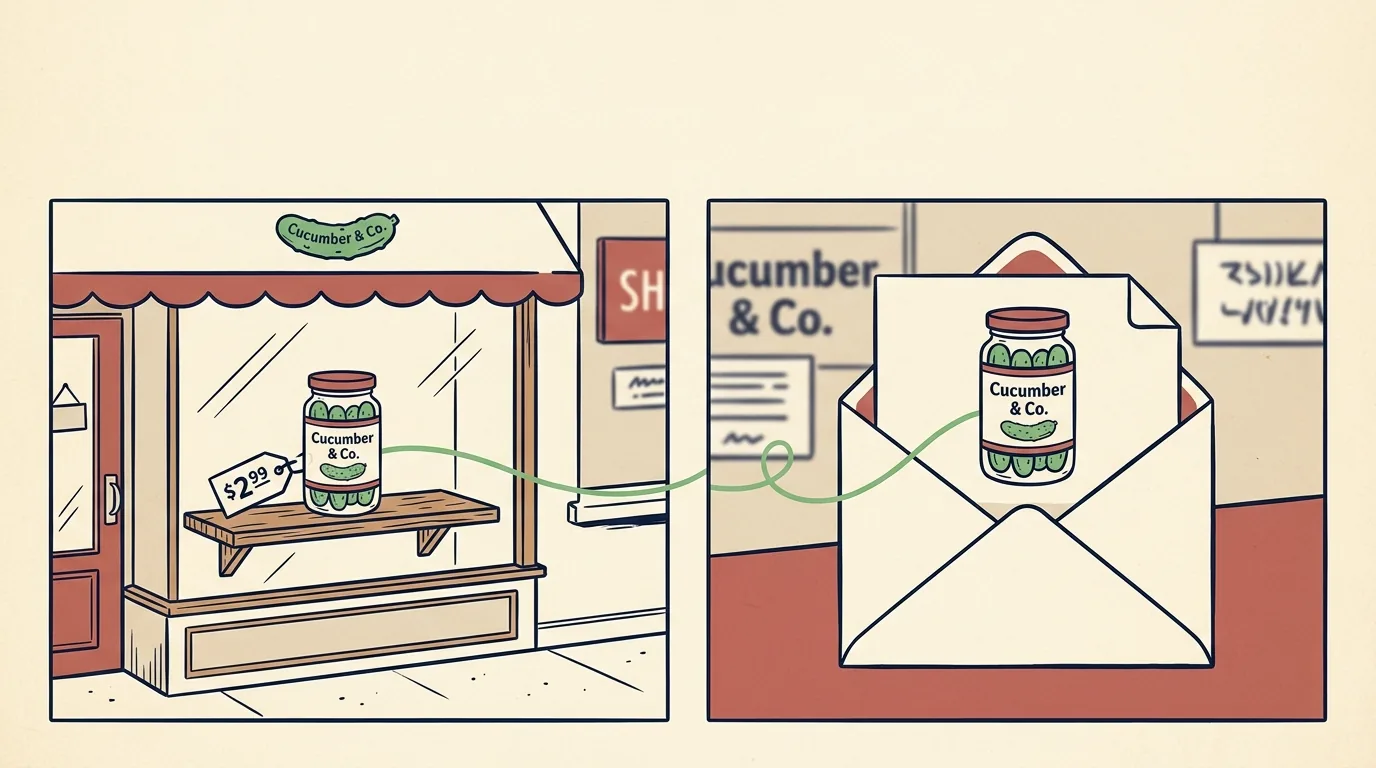

Running HubSpot and BigCommerce together gives you something a lot of merchants want and fewer get, one customer record and one view of the sale, with your storefront and your marketing finally telling the same story. The connection does the plumbing well, and whether it pays off comes down to the content that moves through both systems, because a shopper reads your product on BigCommerce and that same shopper reads your follow-up in HubSpot, and the brands that win with this stack are the ones whose content says the same thing in both places.
What does connecting HubSpot and BigCommerce give you?
It gives you one view of the customer across the store and the CRM. Through the connectors in the HubSpot marketplace, BigCommerce customers sync into HubSpot as contacts, orders sync as deals with the order status mapped onto deal pipeline stages, and your product catalog and abandoned carts flow across in near real time. That is a strong foundation, one contact for every customer, one deal for every order, and a product catalog both systems can read, and it is the setup a lot of mid-market brands are right to want.
The connection keeps the records in sync, and what it hands you on top of that is the chance to run one content operation across both, so the customer meets one brand whether they are on the storefront or in their inbox.
Why does content consistency matter across the two?
Because every item in your catalog has to earn its keep in two places, on the storefront and in the funnel, and each place needs its own writing. Take one product you sell. In BigCommerce its product description carries the storefront and the search ranking, so it answers the shopper who is ready to buy, which is the work of a well-built product page and the reason it pays to write SEO-friendly product descriptions in your own words. That same item then shows up inside your HubSpot nurture emails and lifecycle campaigns, where the writing answers the lead who is still deciding. One product, two pieces of writing, and the customer hears the same brand in both. Keep the two versions telling the same story and the customer reads one confident brand across the whole journey, and anyone who has spent time working inside HubSpot knows that is where the storefront’s message gets carried into every nurture touch.
How do you keep your content consistent across both?
Decide the source of truth for each object before you lean on the sync. Name the system that owns the customer, the system that owns the product, and the system that owns the order, write it down, and let the integration carry a decision you already made, so the records never settle it for you. That is the same discipline behind building a tech stack for unified commerce, where the tools serve one operating model. Then give the content one owner too, one voice for the product on the page and the product in the email, so the two systems reinforce each other and the customer never has to wonder whether they are talking to the same company.
Picture a store that sells single-origin coffee. On the BigCommerce product page the bag reads “washed Ethiopian, notes of cherry and jasmine,” the description that earns the search click and answers the shopper who is ready to buy. That same bag then lands in a HubSpot nurture email that still calls it “our house blend from the archive,” copy nobody updated when the roast changed. The shopper who read the product page now reads the email and hears two different stores. Nothing broke, the sync did its job, and the customer is the one who notices the seam. Give that coffee one content owner and both versions say “washed Ethiopian, notes of cherry and jasmine,” so the store sounds like one place from the shelf to the inbox.
Why is the content layer where the stack pays off?
The content is the part you own no matter how the platforms evolve, and it is what ties HubSpot and BigCommerce into one experience for the customer. Product copy, nurture emails, and the blog posts that pull search traffic into both systems are yours, and one consistent voice across them is what turns two good tools into one brand the customer trusts. That is the work a content partner carries, one voice across the storefront and the funnel, so the reader meets the same brand whether the words are coming from BigCommerce or from HubSpot.
Let us write product content that converts
Ecommerce Content Services →Keep Reading



Frequently Asked Questions
Yes. HubSpot's marketplace lists a data-sync app plus several third-party connectors that link BigCommerce store data to HubSpot, moving customers, orders, products, and abandoned carts between the two.
Customers sync into HubSpot as contacts, orders sync as deals with the order status mapped onto deal pipeline stages, and products and abandoned carts sync across in near real time.
Give the product one content owner so the description that sells on the storefront and the version that nurtures in email tell the same story, and decide that voice before the two systems start filling in their own.
Decide that before you connect anything. Pick the system that owns the customer, the one that owns the product, and the one that owns the order, document it, and let the integration carry that decision.
The record syncs once, and the storefront and the CRM ask that product to do two jobs, so the description that sells on the page and the version that nurtures in email are two pieces of writing built from one consistent voice.

I appreciate how this post gives specific context around How to Keep Your Content Consistent Across HubSpot and BigCommerce. The argument is easier to follow because it connects the headline point with concrete details instead of staying at a slogan level. It gave me a few useful points to think about. Thanks for sharing the perspective.