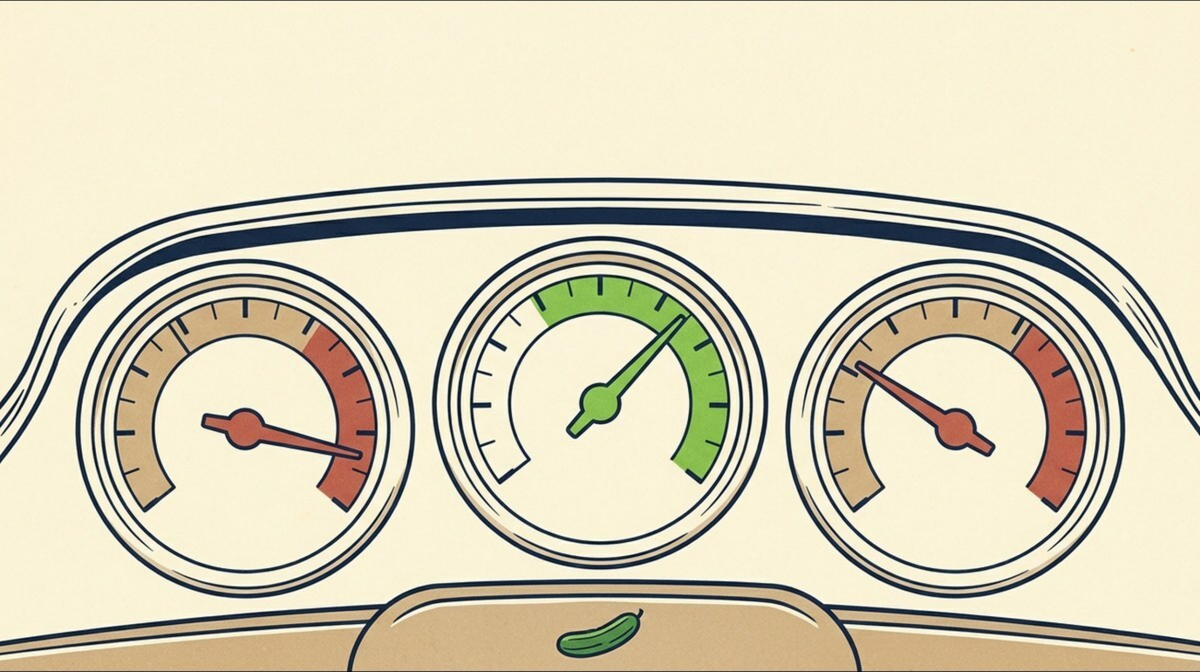

Google’s Core Web Vitals still come down to three numbers, how fast the largest piece of a page shows up, how fast the page answers a click or a tap, and how much the layout jumps while the page loads, and the middle number is a different metric from the one I wrote about in Core Web Vitals for 2023 for Talk Commerce.
Core Web Vitals matter even more in 2026, because performance matters.
What changed in Core Web Vitals since 2023?
Interaction to Next Paint (INP) replaced First Input Delay (FID) as a Core Web Vital on March 12, 2024, according to Google Search Central. FID timed the delay before the browser handled a visitor’s first interaction, and INP observes the click, tap, and keyboard interactions across the whole visit and reports one of the slowest, as web.dev explains.
Search Console dropped FID the day INP took over, and PageSpeed Insights and the Chrome UX Report stopped reporting FID in September 2024, according to web.dev.
Safari added support for LCP and INP in December 2025, so both metrics can now be measured in Chrome, Firefox, and Safari, according to web.dev. The field data Google uses in the Chrome UX Report still comes from Chrome users only.
Chrome 151 turned on soft navigations by default, which brings Core Web Vitals measurement to single-page applications that change pages without a full reload, and Google says how the Chrome UX Report will count soft navigations is still to be determined, according to Chrome for Developers.
What are the Core Web Vitals thresholds in 2026?
The thresholds have not moved since INP took over, and Google measures each one at the 75th percentile of page loads, split between mobile and desktop, according to web.dev.
Largest Contentful Paint (LCP) measures when the largest image, text block, or video in view finishes rendering, and LCP is good at 2.5 seconds or less and poor above 4.0 seconds.
Interaction to Next Paint (INP) measures how long the page takes to respond to clicks, taps, and key presses, and INP is good at 200 milliseconds or less and poor above 500 milliseconds.
Cumulative Layout Shift (CLS) measures how much the layout moves unexpectedly, and CLS is good at 0.1 or less and poor above 0.25.
Do Core Web Vitals still affect Google rankings?
Google’s page experience documentation states, “Core Web Vitals are used by our ranking systems. We recommend site owners achieve good Core Web Vitals for success with Search and to ensure a great user experience generally” (Google Search Central).
The same page adds a limit, “Beyond Core Web Vitals, other page experience aspects don’t directly help your website rank higher in search results.” Google also writes that a good score in Search Console “doesn’t guarantee that your pages will rank at the top of Google Search results.”
What slows ecommerce pages down?
What slows ecommerce pages down the most is heavy overhead that is not needed, extra JavaScript and CSS, and so on.
The fixes for LCP, layout shift, and long JavaScript tasks in Core Web Vitals for 2023 still apply, and the long-task advice now counts toward INP. Google’s Chrome UX Report release notes for the August 2026 data describe INP results across the web as still regressing, and Google says it has no definitive reason.
How do you check Core Web Vitals on your own site?
Search Console’s Core Web Vitals report pulls its data from the Chrome UX Report, and a URL group takes the slowest status of its three metrics for that device type, according to Search Console Help. A group of product pages with good LCP and poor CLS on mobile shows as poor on mobile.
PageSpeed Insights shows the same Chrome UX Report field data for a single URL, next to a Lighthouse lab test that is useful for debugging.
For INP problems, the Long Animation Frames API, shipped in Chrome 123, names the scripts that ran during a slow frame and where in the code each one started.
Which of the three numbers is your store failing on mobile? Start with that number, because the worst metric sets the status for the whole group.
How do Core Web Vitals connect to AI search?
Google says there are no additional requirements to appear in AI Overviews or AI Mode, and lists “Providing a great page experience for users” among the SEO fundamentals that still apply (Google Search Central). The page does not name Core Web Vitals, and Google has not tied LCP, INP, or CLS to AI answers.
A page that loads fast and answers taps quickly still has to be the page worth citing, which is why the new way customers find you runs through content, structured data, and accessibility as much as speed.
How does Content Cucumber help with Core Web Vitals and search?
Content Cucumber starts with a search discovery audit that shows how Google, ChatGPT, Claude, and Gemini see a site and which content is missing, then writes the content that fills the gaps.
I wrote this post with Claude, which drafted the research sections from Google’s documentation, and I approved the result.
Human writers. True story.
Let us help you rank higher with human-written SEO content
Our SEO Content Services →